
Replicating the Natural World
An Introduction to award-wining textile artist Margherita Pandolfini
By Allyson Volpe
When gazing at art, it is always compelling to understand the underlying language that conveys the artist’s message and what inspires them to create. Lady Ripple has the distinct pleasure to collaborate With and to “ripple” the accomplished textile artist Margherita Pandolfini, discovering the underlying influences behind her botanical themed creations.
“Beauty is extremely important for me and I love beautiful things,” artist Margherita Pandolfini begins. “I owe a lot to my mother because she always had, and still does, a great eye for interior design. I was fortunate enough to grow up surrounded with the aesthetics of beauty very much in the English style.” It is no wonder that Margherita has developed into a markedly talented textile artist, winning awards for her work whose designs are reminiscent of William Morrisesque-themed colours and compositions. Her commissions can be found in the homes of her international clients spanning from England to America, Saudi Princes to Parisian designers. .
Growing up between primarily between Rome, Spain and England, Margherita relocated to Florence in 2009, her birthplace city and that of her illustrious Florentine ancestors. She has called it home ever since.
Starting from her education in her teenage years in England, her initial vision was to move into fashion design. It was through her marked drawing skills that she took a different path and studied fine arts and sculpture at University Arts London Camberwell. Her work and curiosity moved her towards experimenting with mixed media, textiles, paintings, drawings, sculpture. “I found the process very therapeutic. There was no end to the experimentation.” She explains, “My art became very tactile, with organic shapes and forms.”
After university, Pandolfini remained in London whilst pursuing a life as an artist and set up her studio with her friends. She worked print-making apprenticeships with other artists and internships in the famous art-scene of central London’s Cork Street and the Lux Centre in East London’s Hoxton neighbourhood. The city was a burgeoning art scene of BritArt where fresh expressions were given important representation. Before its gentrification of today, London’s Shoreditch area was a scene of struggling artists with deep passions and talents. Whitechapel Gallery had just opened, White Cube had newly launched in Hoxton, and emerging artists had their studios in Brick Lane. Installations were popping up and artists had a canvas from which to showcase their talents. “In the London artworld, you either a part of something or you aren’t,” she muses. “It was an incredibly exciting time to be in London as an artist.”
After 14 years, it was time to try something new and more manageable. After a working stint in Rome, the light of Firenze seemed to call her, and she set up her present-day atelier in the city of her lineage. It was here that her love of drawing burgeoned once again.
“I am curious by nature and so studying the lineage and history of the family garden and the greenhouse brought me a profound understanding as to the origins of my love for botanicals and flowers.”
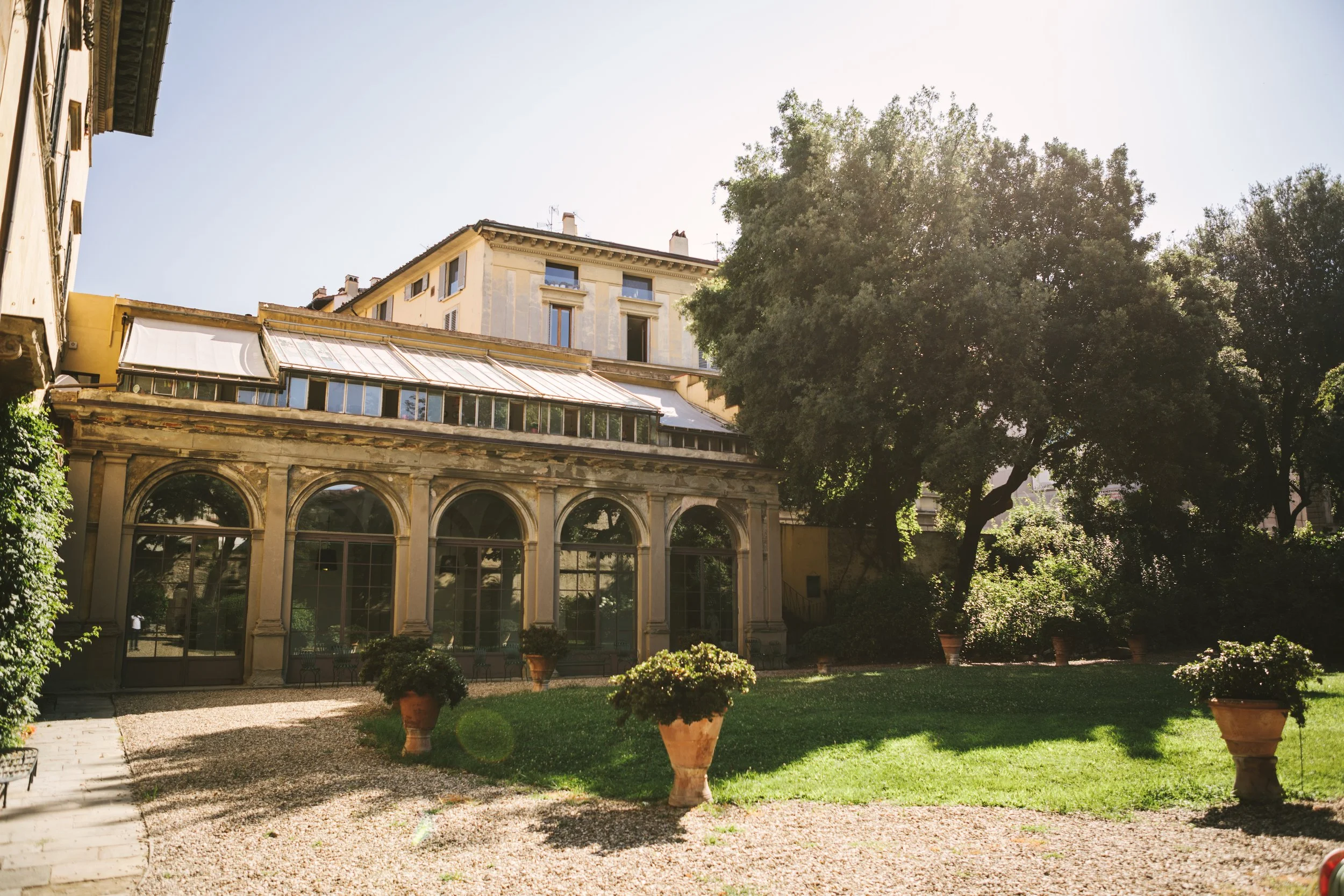
With her talent, her affable character and her open mind, Margherita was introduced to the designer and Polimoda academic Karl Jorns when they collaborated on their first design and architect project together. This project would lead to a very fruitful and productive collaboration with Karl for many years, and Margherita began producing interior design soft furnishings and garden textiles in earnest. They hosted ongoing hand-printing and painting workshops for creatives. In 2009 the creative duo opened their first atelier together. Their list of bespoke commissions grew. After a few years of successful projects, in 2013 they became officially known as La Serra MK Textile Atelier.
The Atelier was once the original palace greenhouse of her ancestors that had been vacant for years. With her own vision, Margherita slowly transformed the space into the lovely, light and airy atelier it has metamorphized into today. Gazing out into the gardens of the ancestral Palazzo Pandolfini, Margherita explains, “I have always been inspired by the visual aesthetic and the taking in of beauty, especially when there is so much light. The greenhouse space was the perfect inspiration for the botanicals, plants and organics found within my work.”
It was only recently that Margherita performed a deep dive into the history of the gardens and the greenhouse. It was in the archives that she found more clues to her flowery, willowy and organic motivations. “I am curious by nature and so studying the lineage and history of the family garden and the greenhouse brought me a profound understanding as to the origins of my love for botanicals and flowers,“ she muses. The garden was plotted out as a basic kitchen orchard in the 1700s and then began its transformation at the hand of Leonardo Pandolfini who grew magnolias and created his own cider from the apples. The next generation of botanical lineage continued in the 1800s and included Eleonora Pandolfini’s love of laurels and citrus magnolias. During the mid-19th century the gardens were curated by Margherita’s ancestor, Sofronia Stibbert, of the famous 19th century relative whose childhood home is now the modern day Stibbert Museum. “It was Sofronia who brought in the more aesthetic botanicals like camellias and more English themed plants,” she explains. In the late 1800s, further transformation of the space was conducted by Beatrice Corsini, whose love of orchids prompted the actual construction of the greenhouse to house them. “Botanicals are in my DNA,” she laughs.
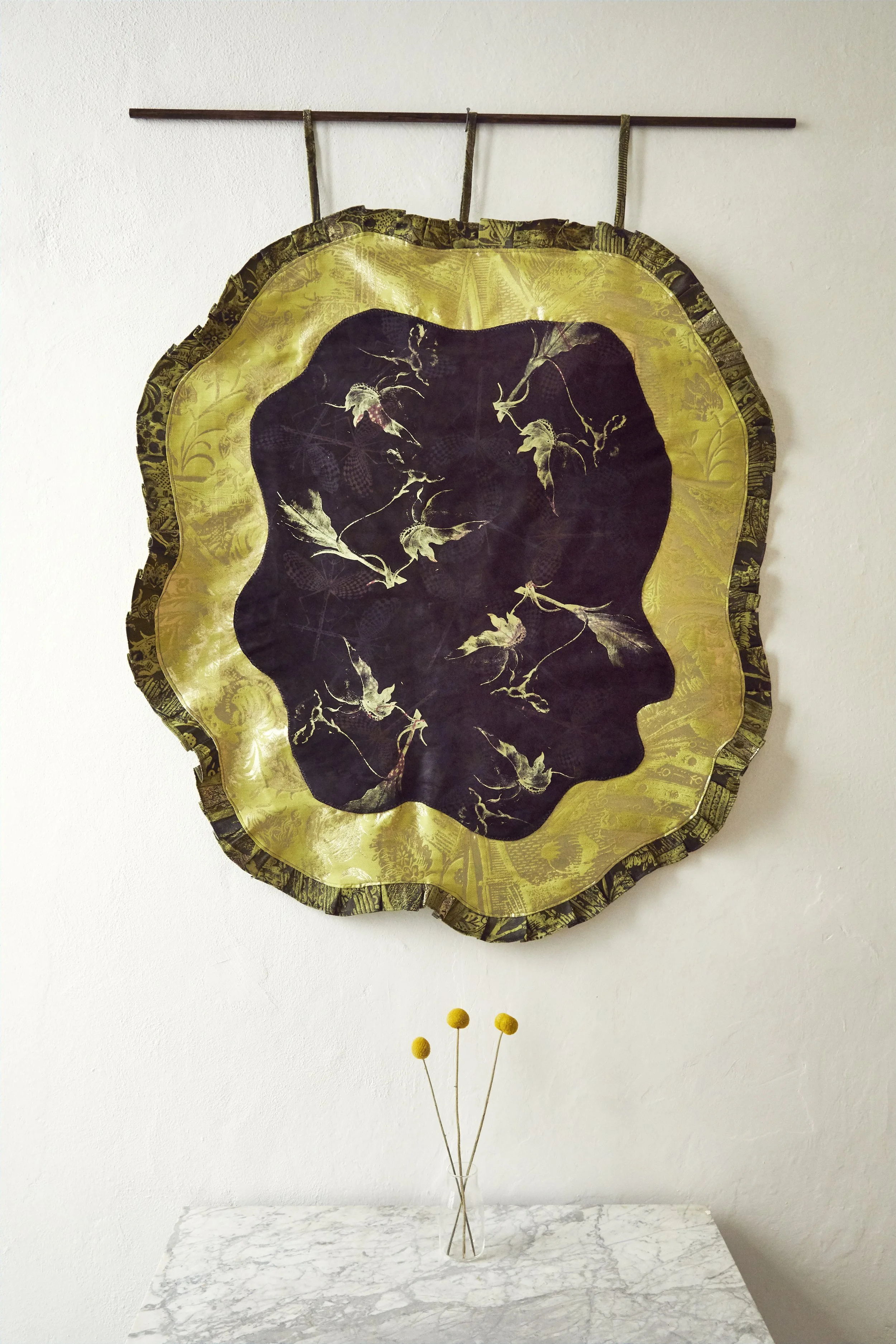
It was in 2024, that Margherita decided to branch out on her own as a solo textile artist. “My whole career as an artist has been a process,” she reflects. “I think that my work is becoming more me.” Always the eternal student in recent years, her curious mind led her to recently qualify as an art therapist and she is even incorporating into her work the Japanese art of Ikebana. “I have always loved colour, form and drawing. Now more than ever, I am drawn to creating organic wall hangings which seems to be my purpose now,” she explains. “As I create, I love the feel of the brush stroke and being very conscious of the flow, the paintbrush, the colours, the shapes and the loops I am putting down on the canvas.”
Within Margherita’s work, there is a sense of connection as the vines link from one plant to another, to the interweaving of nature and the harmony and shape of its rich hues. One is drawn in to a natural connection within the aesthetic. “In my artwork, I am endlessly experimenting and impressed by womb-like shapes and wrapping loops found within nature -- by what umbilically connects one to another,” she explains. “I was born a twin, and it is ironic that only recently I learned that I the umbilical cord was wrapped around my neck at birth.”
Wanting to continue to experiment with the themes of nature is Margherita’s own call to sustainability. “I feel that I am finding peace within my work,” Margherita reflects. “Alignment with nature is very important to me. Replicating the natural world is very soothing and therapeutic.” Often using natural materials and tints, or re-purposing discarded material, her work is as sustainable as it comes and is a unique ode to nature.
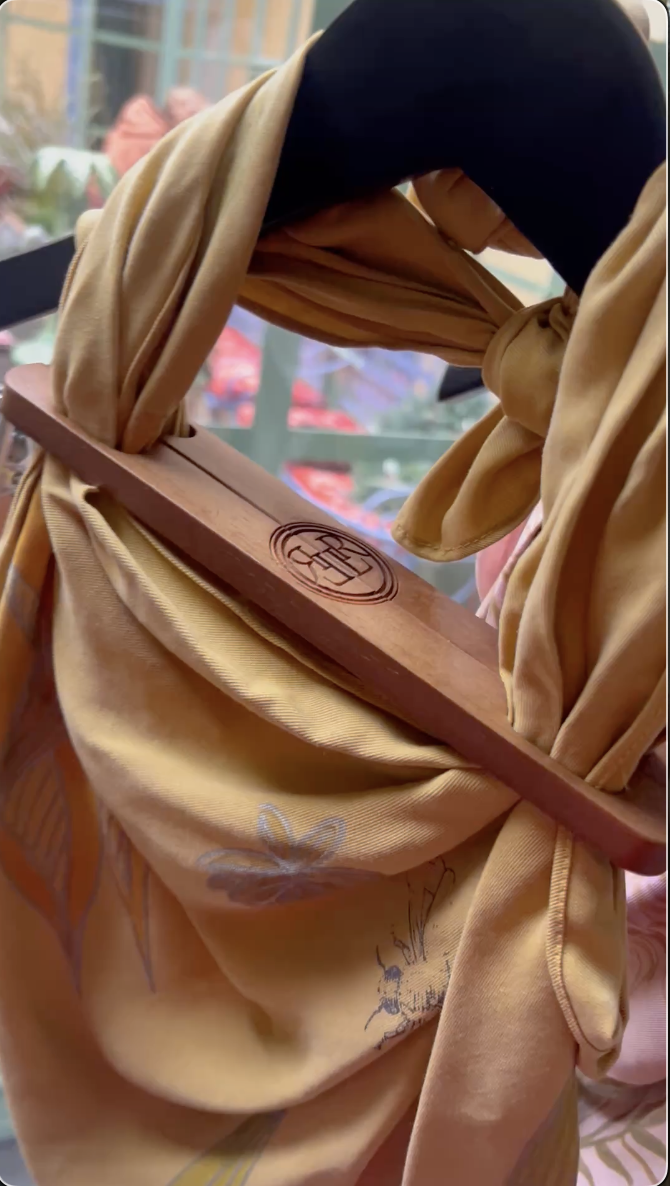
Lady Ripple is delighted with the newest Bella Bag Co-Ripple with Margherita. Our iconically sustainable Bella Bag is comprised of 100% natural fabric that is sustainably sourced, bespoke and decorated with Margherita’s hand-painted designs in this limited-edition series
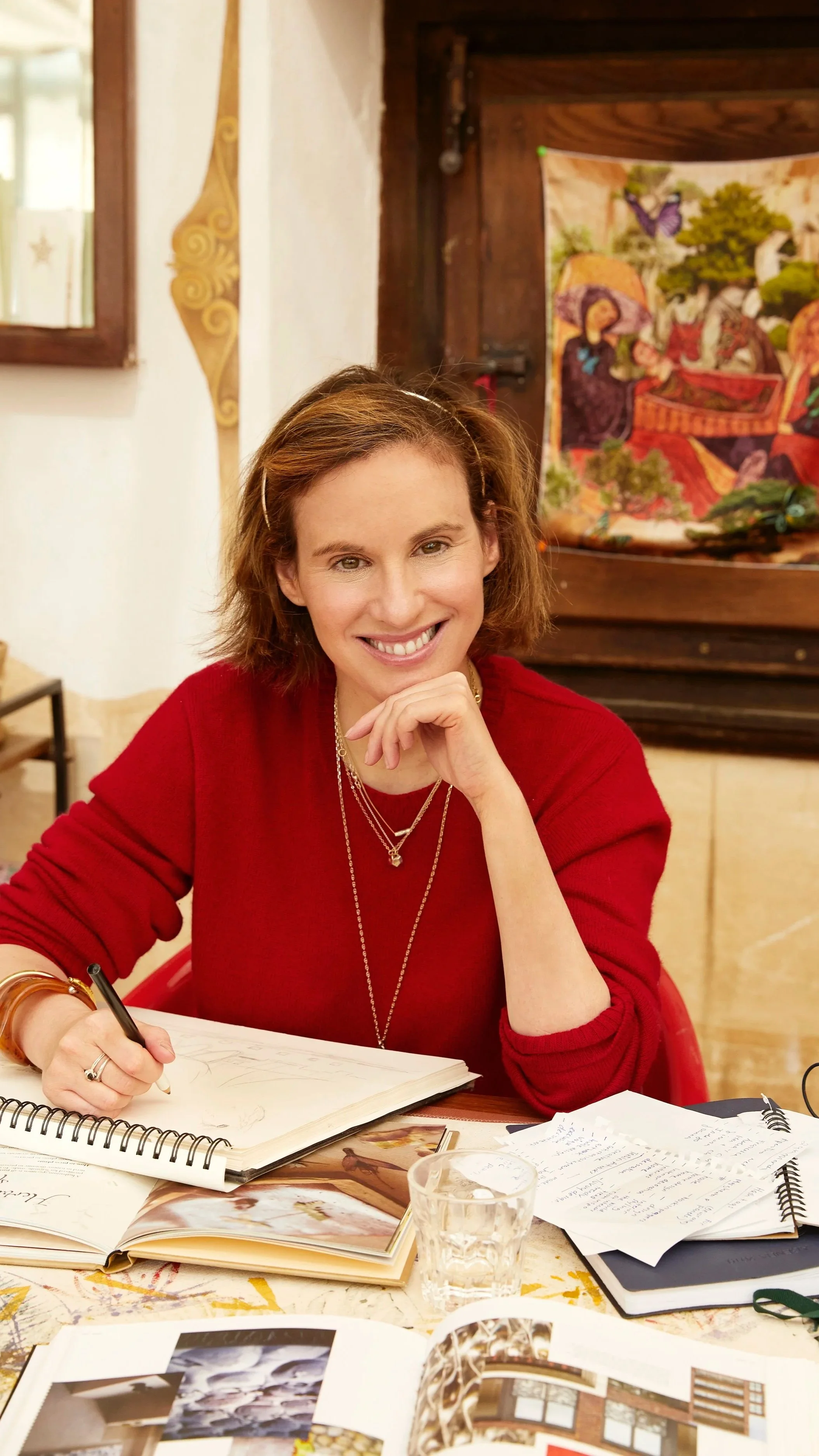
Contact the artist for a private studio visit.
www.margheritapandolfini.com
.